OVC 2016
Odisha Vikash Conclave
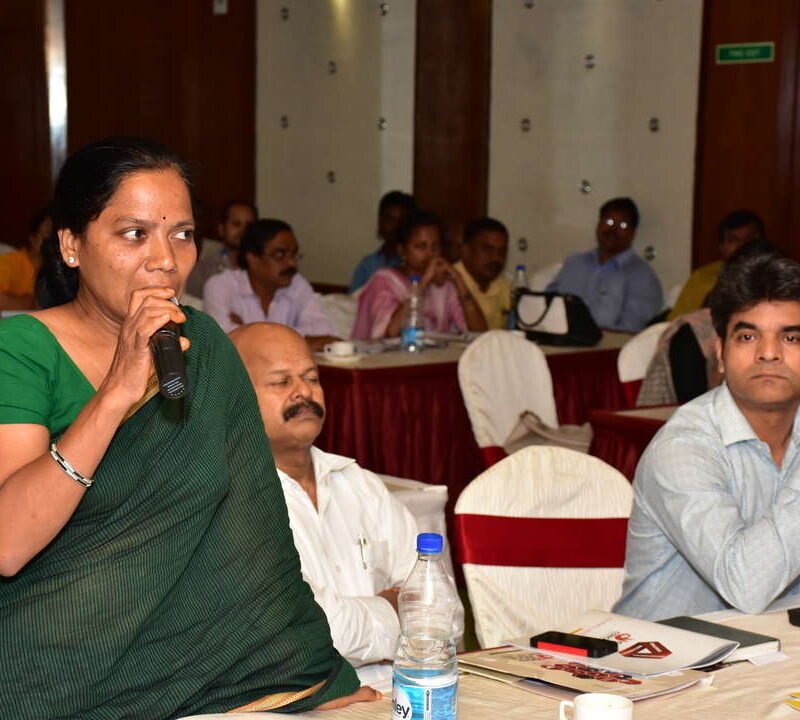
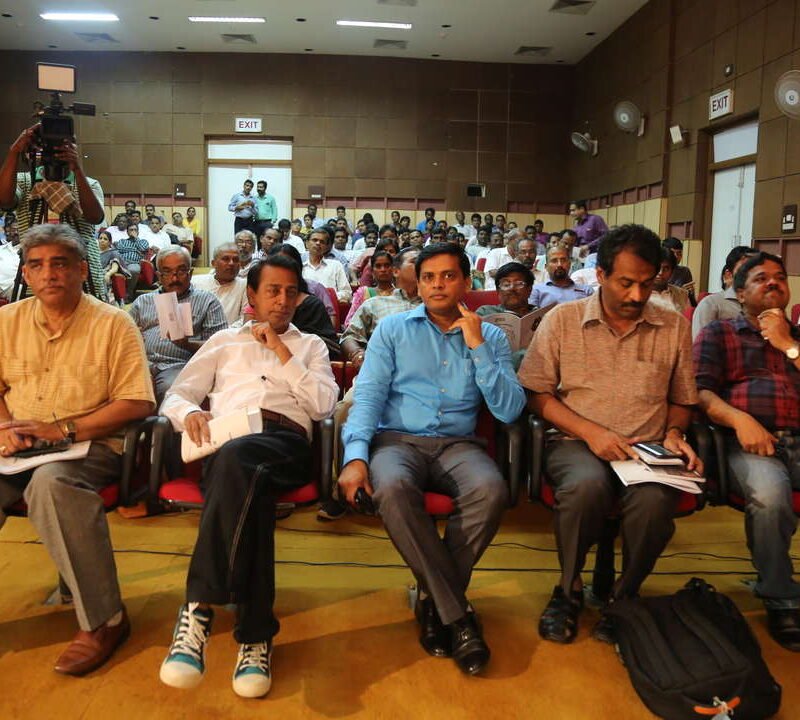
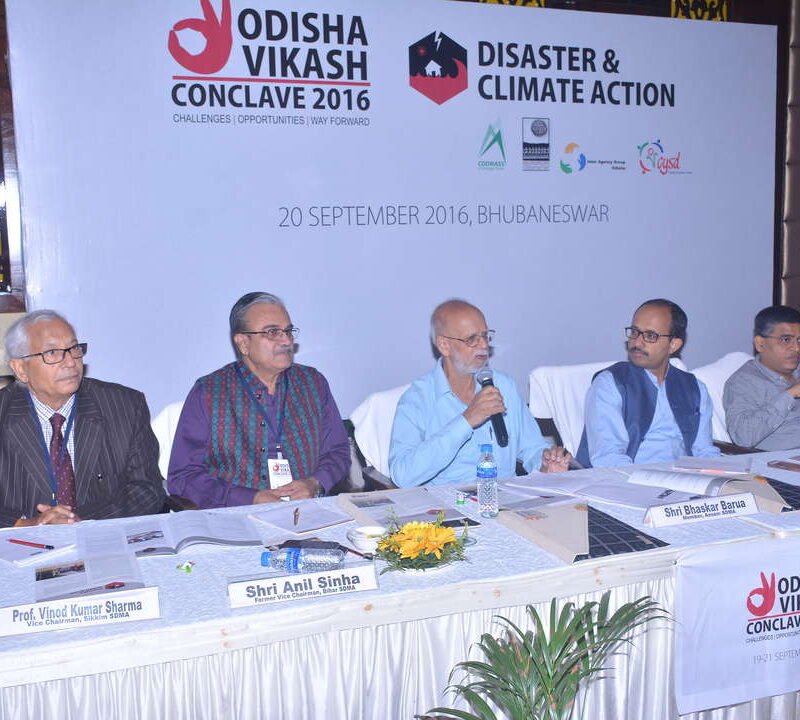
The Odisha Vikash Conclave (OVC) 2016, held on October 23, focused on the theme Transformative Odisha @2036: Leveraging Demographic Intelligence for Development. Organized in collaboration with Government of Odisha and UNFPA, the conclave convened over 300 stakeholders from government, academia, civil society, and the corporate sector.
The discussions explored Odisha’s evolving demographic landscape and its implications for healthcare, education, employment, urbanization, governance, and economic growth.
Download PDF Version






Thematic Tracks
Back Drop
Odisha is endowed with vast natural resources, rich cultural heritage and greater political stability. A host of programmes and schemes have been implemented in recent past to address the issues of the poor and vulnerable communities in the state. The state has witnessed economic growth rate of more than 6% in last few years. However, 32.6% of the population in Odisha still lives below poverty line. The social class and region wise estimates of poverty head count ratio indicate the severe imbalance that exists between social classes and regions. About 63.52% Scheduled Tribes (STs) and 41.39% Scheduled Caste (SC) people in rural Odisha still live below poverty line. The steady economic growth has so far not been able to bring the desired transformation in the society at large. Odisha continues to lag in major economic and human development indicators.
Objectives
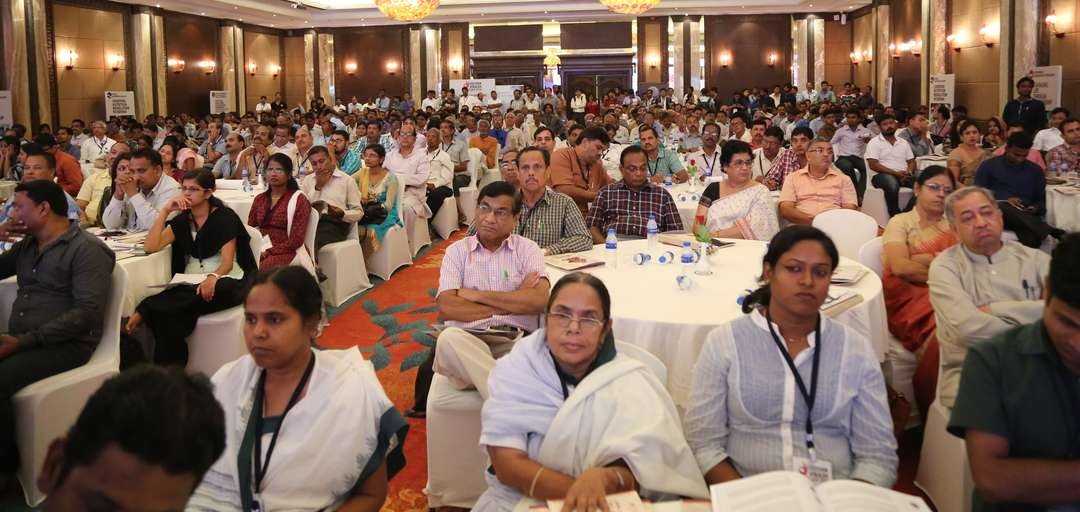
- To create a platform for multiple stakeholders like government, civil society, academia, research institutes and private sector to generate understanding on development challenges in Odisha;
- To provide the government (State and Centre) with grassroots perspective and feedback from the ground;
- To prepare a roadmap for the State in harmony with globally agreed Sustainable Development Goals (SDGs) with identified issues, targets/indicators and time frame;
- To build synergy between the Government, CSOs, academia, research institutes and private sector for convergence and multi-stakeholder collaboration; and
- To develop inter-sectoral focused groups to take forward specific action agenda in line with the agreed roadmap.
“The Odisha Vikash Conclave 2016”
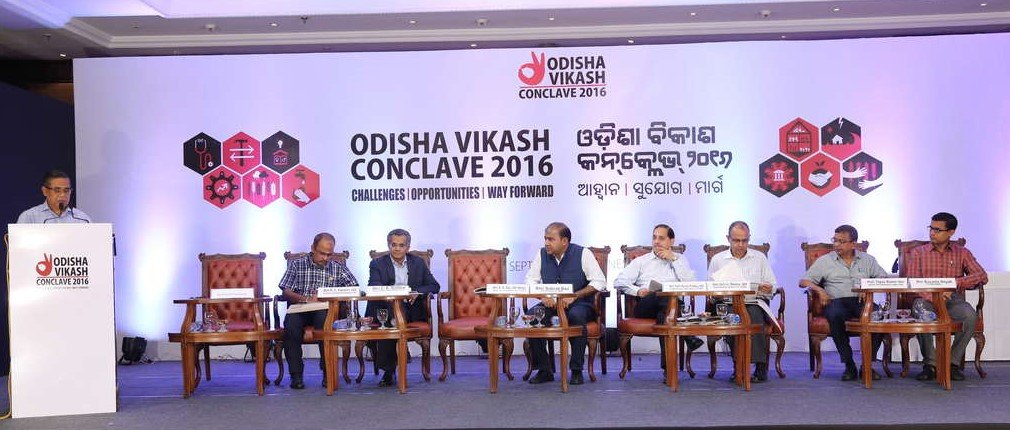
The development challenges in Odisha pose a “many hands problem” and need a multi stakeholder approach. But the government, civil society, development organizations and the private sectors operate in isolation from each other with their own priorities and agenda. There is an urgent need to build synergy among all players for inclusive growth and development of the State.
Tribal Empowerment and Development
Tribal people have the lowest Human Development Index (HDI) and face geographical, cultural and social exclusion. Food insecurity, poor nutrition, lack of sanitation and potable water and high poverty levels aggravate their poor health status. Forced and distress migration is common to many communities but it has of late been high in certain tribal pockets of the State. The quality of governance is an extremely critical input in development. The level of administration of Scheduled and other tribal areas has to be raised expeditiously to match the challenges.
While many organizations have done commendable work in tribal development, it is an area which still suffers from gross neglect. The day long discussion was dedicated to identification of key issues affecting the tribal population. The participants were divided in into groups and discussed on focus areas to provide specific recommendations. Representatives from tribal communities of 15 districts, NGOs, researchers, activists provided feedback and shared their experience.
Download Background Note
Issues & Concerns
Pathways towards Sustainable Food and Nutrition Security:
- The FRA has the potential to secure land and community forest rights of about 25 million people in Odisha including almost 8 million tribals living in 35,254 villages. Gaps in the implementation of FRA need to be identified through research and bridged.
Policy ASKS
- There is need to promulgate a comprehensive State Tribal Policy in Odisha along with necessary amendment in the ITDA Rules. About one third of the tribal population lives in a dispersed manner in non-TSP areas, which should also be addressed in the development programmes

Food and Nutrition Security
The prevalence of stunting and wasting among the under-5 children is 38.2% and 18%, respectively (RSOC-2013-14). As many as 62% ofwomen and 65% children are anaemic and chronically energy deficient. Stunting among the tribal and Other Backward Caste (OBC) Children is 46.1% and 41.3% respectively. The reported deaths of 19 Juanga (Primitive tribal group) children due to malnutrition in Nagada and Naliadab villages of Jajpur District in the month of July 2016 raises serious questions on policy and program delivery effectiveness, governance situation, institutional synergy and convergence and public accountability. There might not be a food famine, but it seems that a nutrition famine engulfs the marginalized communities and compounds vulnerability of the state which also reels under poverty and repetitive occurrences ofnatural disasters.
Download Background Note
Issues & Concerns
- Union and State government departments need work with other stakeholders on World Health Assembly (WHA) targets to achieve SDG target 2.1 and 2.2. Child’s nutrition in the first 1,000 days of life must be stressed focusing on the period between the 6th-23rd month. Though the decline in stunting rate in Odisha is 15.1% (19.9 % for SCs and 19.4 % for STs) in last 8 years, it is not rapid enough for the WHA target (40 % reduction in 10 years).
Policy ASKS
- A State Nutrition Policy should be adopted covering principles, strategy and a menu of programme components for nutrition security of different groups, i.e. children, mothers, old, disabled people, etc.

Rain-fed Agriculture
Rain-fed agriculture accounts for over 50% of foodgrain production and roughly 60%of the value of agricultural GDP in the Country (including grain-fed crops, horticulture, livestock and fisheries, Source- CRIDA, 2011). About 60% of total cropped area (48%of area under foodcropsand68%of that under non-food crops) remains rain-fed today. Besides crops, rain-fed agro-ecological regions are also home to 78% of cattle and 75% of goat population in the Country (PlanningCommission,2011b). Despite the larger production contribution (especially in pulses, millets and oilseeds), rain- fed areas do not receive much policy attention. The very design of agriculture policies and programmes excludes much of the rain-fed areas. Large-scale conversion of households in traditional rain-fed areas from consumption of millets to rice/wheat aided by public procurement and subsidized distribution of rice/wheat through PDS is a striking example of this anomaly.
Download Background Note
Issues & Concerns
Rain-fed Agriculture: Emerging Perspectives
- Odisha is geared to move from a relief model to a long-term sustainable economic model. Special effort is needed to enhance the production/productivity of crops given the reduction in land-holding size, deteriorating soil quality and poor germination of seeds. There should be programmes beyond agriculture including livestock and fisheries. The state should come up with animal husbandry resource index to assess the gross capital that can be generated from livestock.
Policy ASKS
- Support systems and shelters for desi/ indigenous birds should be invested in.
Employment Skill and Migration
Unorganized sector constitutes a crucial part of Odisha’s economy. Unorganized workers number 175.42 lakh (86.1% rural and 24.38% urban). Marginal workers constitute 39% of the total workforce out which as taggering 82% are engaged for 3-6 months and 18% for less than three months. Most of the new employment, as in the past years, is, however, likely to be in the informal sector and in agriculture, both of which have low wage rates and experienced low income growth. Participation of women cultivators decreased by 19 % from 9 lakh to 7.29 lakh between 2001 and 2016. The Odisha Building and Other Construction Workers’ Welfare Board has been constituted to provide labour welfare schemes for the unorganized workers engaged in construction work. The Board so far has enrolled 5,40,117 workers and disbursed Rs 69,18,41,897 out of Rs 183,40,80,047 collected access towards welfare.
Download Background Note
Issues & Concerns
Employment:
- The scope of employment must be expanded by developing skills especially among youth, which can also disrupt the process of distress migration.
Policy ASKS
- A State Welfare Board should be constituted for non-construction workers and migrant workers for customized social security and welfare provision.

School Education and Quality Learning
Despite huge investment in education under central flagship programmes such as District Primary Education Programme (DPEP) and Sarva Shikhya Abhiyan (SSA), and after six years of implementation of the RTE Act 2009, the state of public education in Odisha leaves a lot to be desired. Only 3% of all schools in Odisha could fully comply with the RTE Act with less than 1% of the schools fully complying in the districts of Malkanagiri, Nabarangapur, Nuapada and Rayagada (School Report Card, DISE-2013-14).
Download Background Note
Issues & Concerns
Quality Education
- While the number of private schools in Odisha has increased from 4340 in 2010-11 to 5088 in 201415; the Department of School & Mass Education has decided to close down government elementary schools where the total number of enrolled students is less than ten. Instead of making remedial interventions, closing down government schools is a matter of serious concern.
Policy ASKS
- A State Policy on School Education, in line with the National Policy on Education, should be put in place to systematically address state specific and contextual issues:
• Early Childhood Education (ECE) should be integrated with primary education.
• A Common School System across the State should be designed and established.

Health
In addition to the existing challenges of maternal and child health nutrition, the under-resourced public health system in Odisha with inadequate infrastructure, human resources and limited multi-sectoral initiatives exacerbate the health problems. Though the share of public expenditure in Odisha has increased after introduction of the National Health Mission (NHM), it is not adequate to address the key issues like high out-ofpocket expenditure, shortage of doctors/specialists in public health facilities, etc.
Download Background Note
Issues & Concerns
Financing for Health:
- Public spending has been considerably less not only in Odisha but across India to achieve the “health for all agenda”. Goal 3 of SDG which talks about universal health coverage and indirectly focuses on financial risk protection can be achieved by scaling up public spending. There are too many schemes but limited re s o u rc e s l e a di ng to p ro b l e m s i n implementation. Schemes need to be prioritized as per their link with the SDGs.
Policy Asks
- A comprehensive and meaningful state health policy should be developed addressing the needs.

Water, Sanitation and Hygiene
Safe drinking water, improved sanitation and hygiene are critical to overall well-being of a community. However, despite considerable investments, a sizeable population in the State continue to live without access to safe drinking water, sanitation and hygiene – recognized as essential human rights. While sanitation, till recently, did not figure among the development agenda of the State with all interventions limited to service delivery only. Access to safe drinking water still eludes many in the rural areas. Ideal hygiene practices are largely determined by access to and use of toilets and safe water and hastened by a process of behavior change. The health, economic and social implications of poor WASH facilities and practices have been proven by several studies and programmes.
Download Background Note
Issues and Concerns
Water:
- Water, sanitation and hygiene are intrinsically linked and their impact is enormous as 50 % of preventable diseases can be reduced by addressing water and sanitation issues.
Policy Asks
- Provision of drinking water should be based on water security plan prepared by people and Panchayat/ULBof the areas/habitations concerned. All drinking water provisioning must have inbuilt source sustainability measures from the outset.
Financial Inclusion
Financial inclusion means the delivery of financial services at affordable cost to disadvantaged and low-income segments of the society. Access to institutional financial service is important which can play a critical role in generating employment and income at micro level. Ensuring financial services to all households has however, been a challenge mainly because of the remote geographical spread and inadequate infrastructure in the rural and hard to reach areas of the State.
Download Background Note
Issues and Concerns
Water:
- Banking services outreach must be extended to remote areas of the state along with promotion of financial literacy among the rural poor.
Policy Asks
- A state level institution of excellence for financial inclusion should be set to build capacity of individuals and institutions involved.

Disaster and Climate Action
Odisha is known as a hotspot for natural disasters, such as flood, drought, tropical cyclones, extreme temperature, thunderstorms, and has witnessed a series of such disasters on a recurrent scale. Existing hazards have been compounded by socio-economic distress, unplanned urbanization, environmental degradation, and the impact of climate change.
Download Background Note
Issues and Concerns
Strengthening Disaster Management Institutions
- Institutional mechanisms need to be developed to deal with extreme temperature, thunder storms, urban disasters, mineral exploitation, issues of coastal zone etc. to ensure better preparedness.
Policy Asks
- Climate Change Action Plans are to be converged with Disaster Planning in developing resilient and sustainable development models in the light of Vision 2030.

Sustainable Development Partnership: CSR Round Table
The session had intensive discussions on the desirable engagement of multiple stakeholders and the need for appropriate mechanisms for developing and executing models of partnership among government, corporate organizations and CSOs/NGOs. Representatives from various corporate bodies and CSOs/NGOs enthusiastically participated. The purpose was to find out opportunities, address challenges and suggest possible framework for multi-stakeholder partnership. The possibility of development of a State level collaborative platform for effective planning and execution of development initiatives was also explored. The thrust of the session was to chalk out strategy for the tripartite partnership model to address some of the critical development challenges in the State.
Download Background Note
Issues and Concerns
- As the CSR budgets cannot match government expenditure, problems and issues for action need to be carefully identified through research and consultation to have maximum impact in a specific area which can subsequently be scaled up by the government.
Policy Asks
- tripartite convergence mechanism should be devised to focus on critical areas receiving less attention at present (e.g. backward districts, support to specific tribal groups, etc.) and identify options for strategic intervention.

Inclusive Governance, Fiscal Management and Social Accountability
The quality of governance in a state is determined by how effective the prevailing mechanisms of accountability of the government is towards people’s representatives (in the State Legislature) as well as towards the people. Equally important dimensions are transparency in government process and the space for participation of people in the process of setting up budgetary priorities and contours of public policies. Besides, it is also critical to discuss the ways and means of making public resources available to the state government for giving priority to the development sectors. The session examined the quality of governance in Odisha with a critical eye on public finance and development financing in the state. The Session highlighted implications of recent developments in the federal-fiscal architecture of India, persistent challenges that the state faces and critical policy recommendations for the state government.
Download Background Note
Issues and Concerns
Governance Accountability
The Public Affairs Index (PAI) developed by the Public Affairs Centre (PAC), Bangalore has tried to measure the quality of governance across states based on 10 themes, 25 focus subjects and 68 indicators. The PAI focuses on institutions, processes and considers three years’ data to indicate movement.
Policy Asks
- Social sector allocation and expenditure – particularly in education, health, skill development for increasing employability of youth – should be increased. Reprioritization of social sector expenditure towards marginalized sections, rural and hard-to-access areas is required.

Way Forward
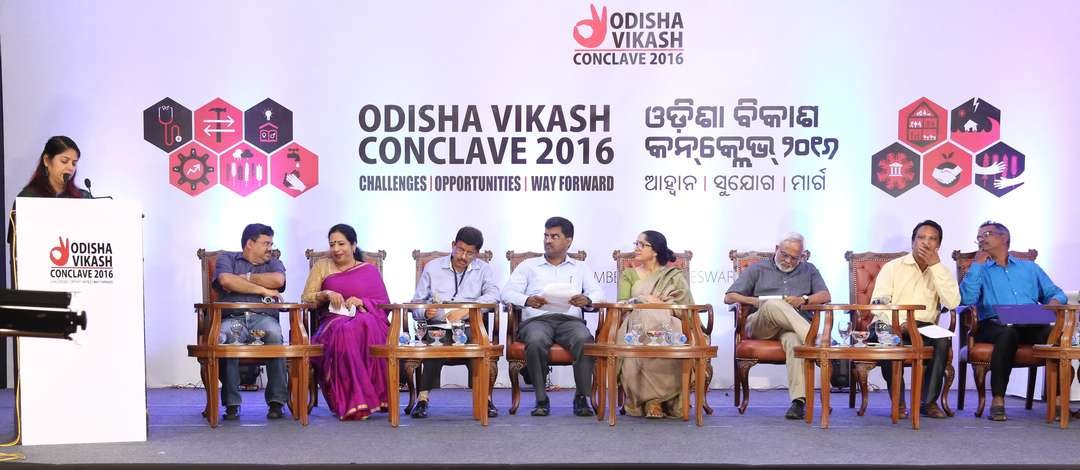
Ms. Sneha Mishra welcomed all the participants and guests to the session on ‘Way Forward’ on 21st September and gave a brief overview of the programme and thematic tracks over two days, which brought up valuable inputs for policy makers, practitioners and corporate agencies. Introducing the Session, Shri Jagadananda underlined the key aspects of the OVC 2016:
Panelist & Speakers









COLLABORATORS