OVC 2025
Pathways to Climate Resilient &
People-Centric Development
Recommendation from Odisha Vikash Conclave(click here)
As Odisha approaches its centenary in 2036, it stands at a critical crossroads -where ecological integrity, social justice, and economic ambition must converge through a place- based approach considering diverse coastal, tribal and agrarian geographies.
The state’s diverse landscapes, from coasts to forested highlands, are vital ecosystems supporting millions of livelihoods. However, these systems are under significant pressure from climate extremes, degradation, and extractive development models.
The Odisha Vikas Conclave (OVC) 2025 is designed to catalyze a new development paradigm. It frames “Balanced Development and Climate Resilience” as the central organizing challenge. The Conclave will foreground the interdependence between forest and coastal restoration, community stewardship, and resilient local economies, exploring how just transitions can protect both people and nature.
Download PDF Version

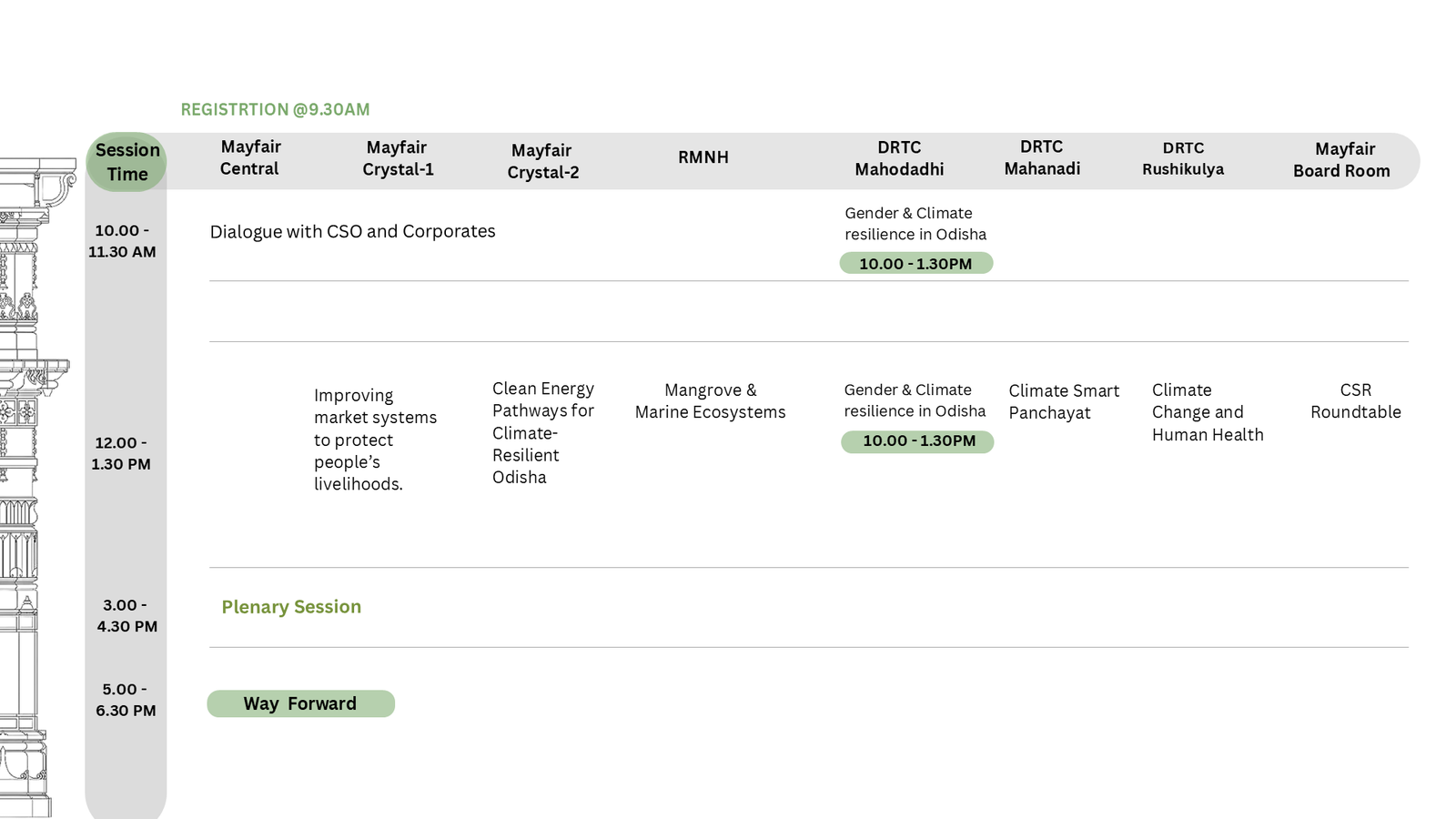
Ecosystem Protection Restoration & Climate Resilience

Just Transition Livelihoods,& Inclusive Economies

Addressing Vulnerability Multipliers

Knowledge Technology, & Governance for a Resilient Future

Social Agency, Leadership, & Accountability
Process
Programme Design
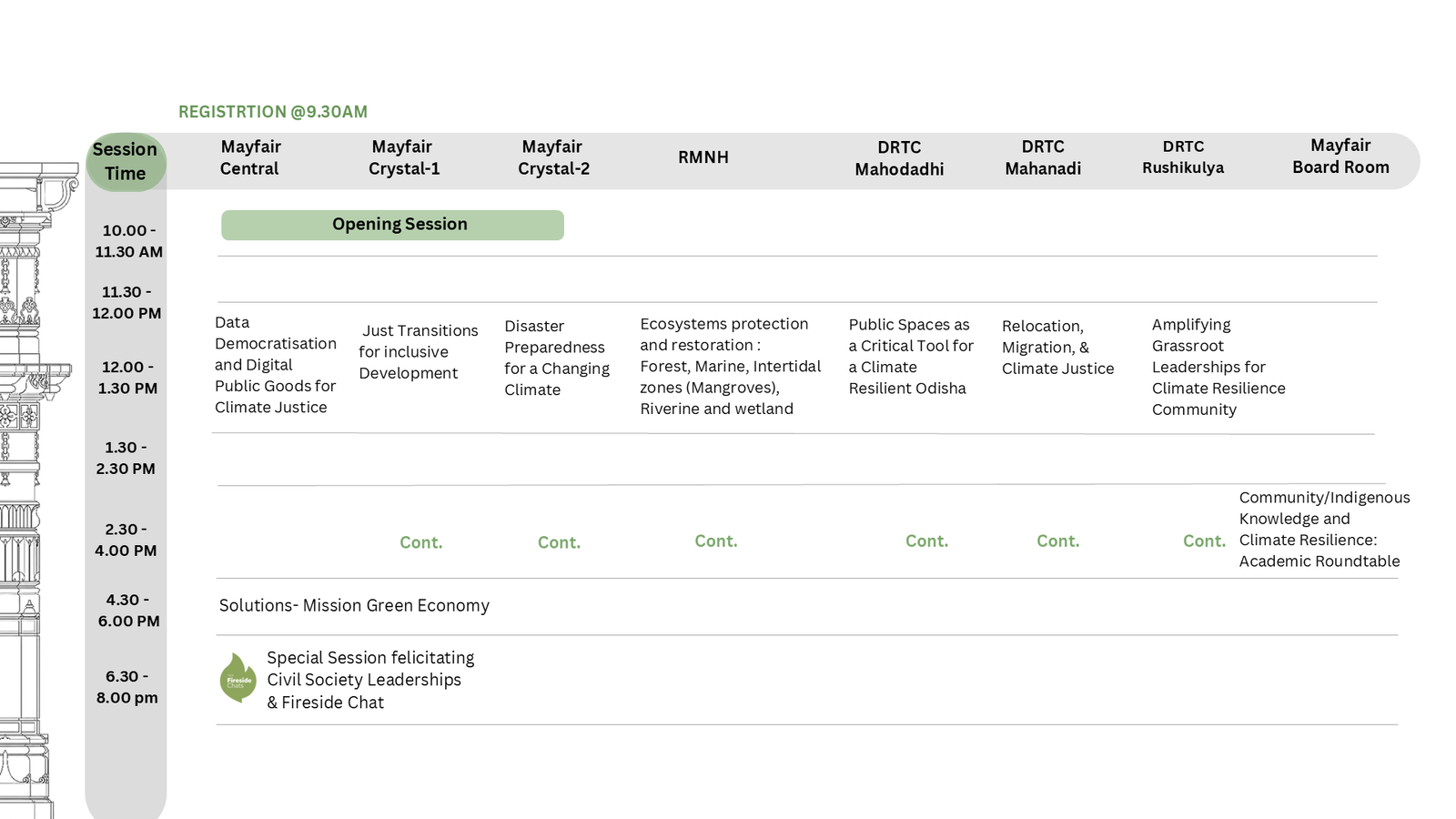
Thematic Tracks
Back Drop
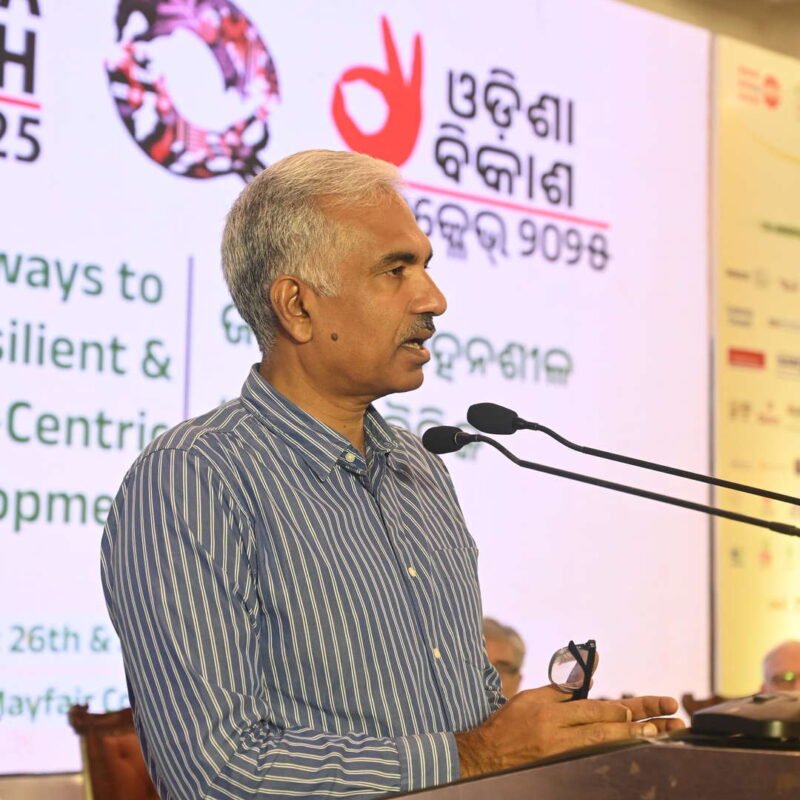
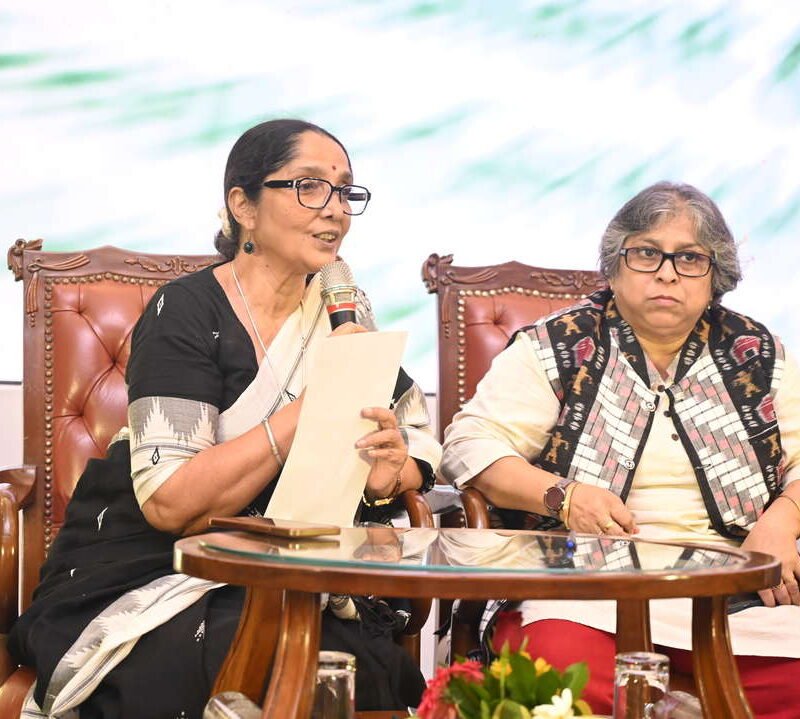
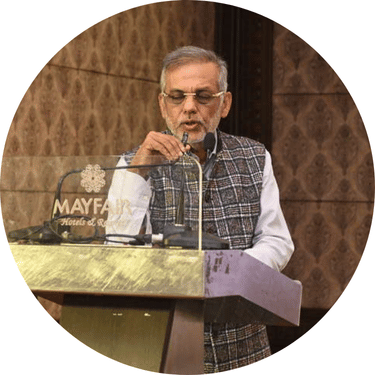
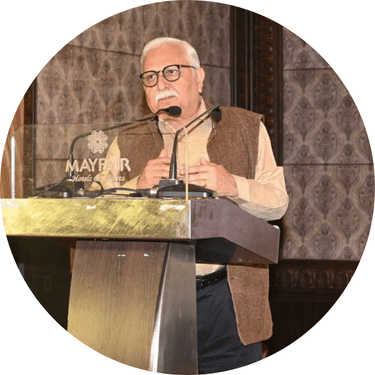
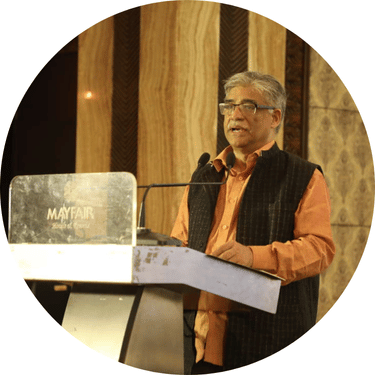
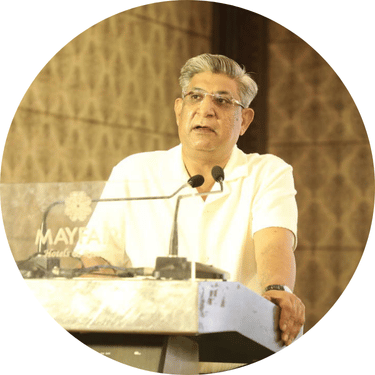
The Odisha Vikash Conclave (OVC-2025) opened on an inspiring note at Mayfair with a soulful NYP volunteers’ performance, setting the tone for the day. In the inaugural session, Dr. Jagadananda highlighted the need for collective, grassroots action for Odisha’s progress. Dr. Nadeem Noor framed the discussions by stressing that governance must respond to people’s needs, while Dr. Srestha Banerjee emphasized climate resilience and a just transition for communities.The Conclave’s design and five thematic pillars were introduced by Avimuktesh Bhardwaj and Swapna Sarangi, outlining the roadmap for multi-stakeholder dialogue. A message from Rajesh Tandon reinforced that development must not come at the cost of natural resources.In the keynote address, Manoj Ahuja underscored people-centric development, student engagement, the role of NGOs, and Vision Odisha @2036. The session concluded with remarks by Rajib S. Sahoo, co-chaired by Swapnasri Sarangi, setting a collaborative tone around demography, climate, and inclusive development.
Objectives
- To align Odisha’s development trajectory with climate realities and Odisha@2036, adopting a place-based and people-centric approach.
- To shift climate action from fragmented responses to integrated, systems-based governance linking ecosystems, livelihoods, and institutions.
- To advance climate resilience and just transitions that protect vulnerable communities while enabling green livelihoods and equitable economies.
- To strengthen community stewardship, indigenous knowledge, and area-based planning in ecosystem restoration and adaptation efforts.
Participants
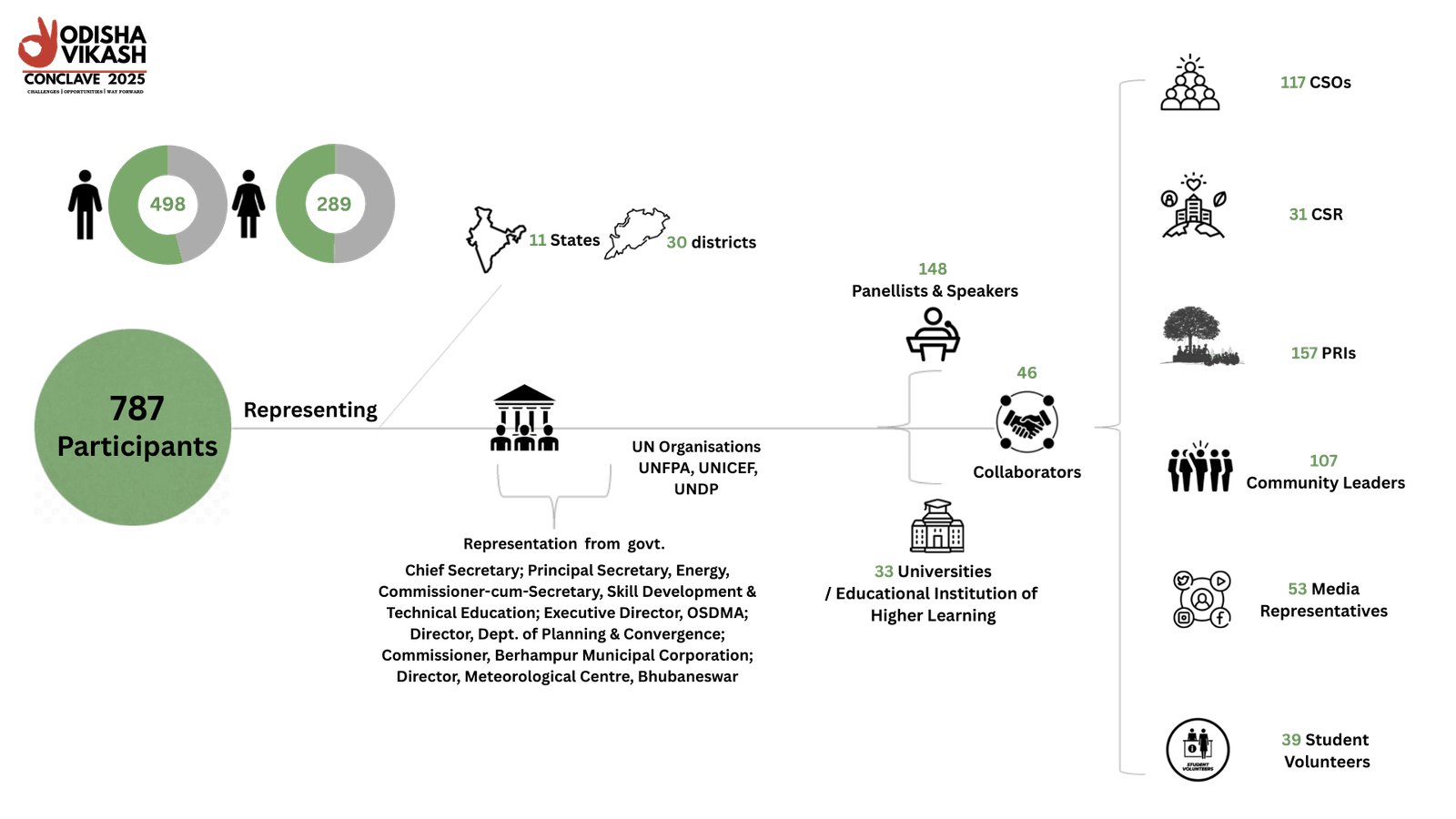
A total of around 787 participants including civil society, corporates, academia and researchers and PRI representatives, besides the invitees from the Government will participate in the event.
Collaboration
In addition to our partnership with United Nations Population Fund, we extended an invitation to the Government of Odisha to participate as a collaborator, strengthening the Conclave’s policy alignment and development perspective.
”“Odisha’s development journey hinges on deep collaboration across sectors, with community-based organisations and inclusive academic engagement driving real change”
Shri Manoj Ahuja, IASChief Secretary, Govt. of Odisha
”“A poverty-free Odisha will require us to confront last-mile challenges. The state must recognise the harbingers of last mile challenges. It must recognise the plight of the poorest of the poor”
Shri JagadanandaMentor & Co-Founder, Centre for Youth and Social Development`
”“In order to boost the economy, the only viable solution is to increase the Female Labour Force Participation in the state”
Dr. Md. Nadeem NoorState Head, UNFPA
”“It is important that the state of Odisha comes to terms with a model of industrial and mining development that does not displace or destroy the environment and natural resources”
Dr. Rajesh TandonFounder-President, PRIA
”“There is clear evidence since the last decade that climate change is no longer a theory or a scientific problem, it is a development problem.”
Dr. Srestha BanerjeeDirector, iFOREST
”A body may survive with low hemoglobin, but a state stagnates when the development gene within its people is missing
Shri Rajib S. SahooChairperson, Indian Chamber of Commerce
Ecosystems Protection and Restoration: Forest, Marine, Intertidal zones (Mangroves), Riverine and wetland
Amid rising global concerns about the effects of climate change on natural resources, rural Odisha’s poor and vulnerable communities require critical attention. Natural resource degradation, fragmented landholdings, limited access to information, credit, and markets, weak community-based institutions, and the mismanagement of common-pool resources exacerbate livelihood insecurities. These challenges intensify in rain-fed regions—ecologically fragile landscapes with erratic rainfall, recurring droughts, and degraded soils—where population pressure and competition over water and land further strain resources. Small and marginal farmers (90% of Odisha’s farming population) face growing risks of income shocks and distress migration. Women experience compounded vulnerabilities—including limited access to healthcare, education, natural resources, and information technologies—despite being central to sustaining community livelihoods.
Download Background Note
Highlights
Odisha at the Climate Frontline:
Odisha faces compounded climate risks—cyclones, droughts, floods, heat stress, and sea-level rise—disproportionately impacting small farmers, tribal communities, women, and coastal populations.
Need for a Landscape-Based Governance Shift:
Sectoral approaches are insufficient; forests, rivers, wetlands, coasts, and livelihoods must be governed as interconnected ecological systems at landscape and basin scales.
Key Strategic Questions
1)Governance & Rights
How can Odisha institutionalise community stewardship with secure tenure and real decision-making power across forests, wetlands, rivers, and marine systems?
2)Landscape & Basin Planning
What institutional mechanisms can enable integrated landscape- and basin-level planning that aligns ecology, livelihoods, and climate resilience?
3)Gender & Equity
How can women’s roles in NTFPs, fisheries, wetlands, and value chains be formally recognised, strengthened, and rewarded through policy and markets?

Disaster Preparedness for a Changing Climate
The climate emergency is one of the most pressing challenges of our time. Rising global temperatures, shifting weather patterns, and the increasing frequency of extreme events—such as heatwaves, droughts, floods, and storms—are disrupting lives and economies worldwide. The burden of these impacts falls disproportionately on marginalized and vulnerable communities, making the task of building resilience a matter of urgency.
Download Background Note
Highlights
Expanding Disaster Risk Profile:
Odisha’s disaster landscape is no longer limited to cyclones and floods; emerging hazards like heatwaves, lightning, landslides, and sea ingression are increasing in frequency and intensity due to climate change.
Disproportionate Impact on the Vulnerable:
Marginalized communities—particularly rural poor, women, elderly, and informal workers—face higher exposure and lower adaptive capacity, making disaster preparedness a social justice issue.
Policy Recommendations
Evolving Risks
How are climate-induced hazards such as lightning, heatwaves, and landslides reshaping Odisha’s disaster risk profile, and which communities are most at risk?
Evolving Risks
How can Climate Smart Gram Panchayat principles be practically embedded within VDMPs and GP-DMPs to strengthen preparedness and adaptive capacity?
Early Warning & Communication
What mechanisms can improve coordination between CSOs, PRIs, and government agencies to ensure timely early warnings and effective last-mile communication?

Just Transitions, Livelihoods, and Inclusive Economies
India is entering a critical decade of economic transformation — one that must balance growth ambitions with climate imperatives and social inclusion. As the country advances toward a net-zero pathway, the twin challenges of livelihood security and economic resilience in regions dependent on fossil fuels, natural resources, and traditional sectors have come to the fore.Odisha, with its rich mineral base, strong industrial backbone, diverse forest resources, and agrarian economy, stands at the heart of this transformation. The state’s development ambition, growth opportunities, and climate vulnerabilities must be carefully balanced to chart an inclusive and sustainable pathway for the future. Odisha’s transition story will increasingly be defined by shifts — from coal and minerals to renewables, from conventional industry to green manufacturing, and from subsistence farming to diversified and climate-resilient livelihoods.
Download Background Note
Highlights
1. A Decade of Transition for India and Odisha
India’s net-zero pathway places livelihood security, economic resilience, and social inclusion at the centre of growth—especially in resource- and fossil fuel–dependent regions like Odisha.
2. Odisha at the Core of the Green Shift
With coal, minerals, forests, agriculture, and industry coexisting, Odisha’s transition will shape how growth shifts from extractive models to renewables, green manufacturing, and climate-resilient livelihoods.
Key Strategic Questions
1. Just Transition Pathways
How can Odisha design region-specific just transition strategies for coal, mining, and industrial clusters that protect livelihoods while enabling green economic diversification?
2. Inclusive Green Growth
What reforms are needed to build regenerative, fair, and circular market systems that reduce livelihood risk and strengthen producer collectives, women’s SHGs, and FPOs?
3. Role of Public Institutions and Funds
How can state policy, DMF, CSR, and rural development missions be better aligned to support locally anchored and inclusive green transitions?

Data Democratisation and Digital Public Goods for Climate Justice
This session merges themes of data accessibility and digital infrastructure, framing them as inseparable components for achieving climate justice. Effective climate action requires both the democratisation of data—making it accessible and inclusive of diverse knowledge systems—and robust Digital Public Goods (DPGs), the open and interoperable infrastructures needed to manage that data. The session confronts the challenge of designing digital systems that empower marginalized communities, ensuring the state’s digital transformation strengthens climate justice. It will focus on embedding governance protocols within the OSDP that give official weight to community-derived knowledge, moving beyond technical discussions to address power dynamics and prevent “epistemic injustice”.
Download Background Note
Highlights
Data and Digital Infrastructure Are Inseparable for Climate Justice:
Climate justice depends not only on access to climate data but on robust, open, and interoperable Digital Public Goods (DPGs) that govern how data is produced, shared, and used.
Democratising Data Beyond Technology:
The session reframes data accessibility as a governance and equity challenge—recognising community knowledge, lived experience, and indigenous systems as legitimate data sources.
Policy Recommendations
1)Bridging the Governance Gap:
How can the OSDP and related state policies systematically capture, validate, and integrate lived experiences and indigenous knowledge of climate-vulnerable communities into official decision-making?
2)Digital Architecture for Resilience:
What architectural principles are required to build an interoperable digital ecosystem that connects diverse DPGs with state systems like EWDS, ensuring continuity during climate shocks?

Clean Energy Pathways for Climate-Resilient Odisha
This session explores ecosystem models and solutions for integrating clean energy into livelihoods in Odisha, with a focus on enhancing productivity, improving cost efficiency, and reducing drudgery. It highlights how renewable energy technologies can transform livelihood practices, strengthen local economies, and build resilience against climate change. Bringing together end users, technology providers, grassroots NGOs, and financiers, the session aims to foster dialogue and collaboration for scaling sustainable, energy-led livelihood solutions.
Download Background Note
Highlights
Clean Energy as a Livelihood Enabler:
Renewable energy is not just an infrastructure solution—it directly enhances productivity, reduces drudgery, lowers operating costs, and strengthens climate resilience for smallholder and informal livelihoods.
Odisha’s Livelihood–Energy Nexus:
Odisha’s dependence on agriculture, natural resources, and MSMEs makes decentralized clean energy critical for protecting livelihoods against climate shocks and energy insecurity..
From Isolated Solutions to Ecosystem Models:
Sustainable impact requires moving beyond stand-alone technologies toward integrated ecosystems that connect energy solutions with finance, skills, markets, and policy support.
Policy Recommendations
Ecosystem Design:
How can clean energy interventions be designed as livelihood ecosystems that integrate technology, finance, capacity building, and market access rather than remaining siloed solutions?
Scaling Pathways:
What enablers—policy, finance, institutional support, and capacity—are needed to scale clean energy–based livelihood models across diverse regions of Odisha?
Gender & Climate resilience in Odisha: pathways to Inclusive and Sustainable Development
In Odisha, a significant increase in the percentage of older persons is anticipated, rising from 11.5% in 2021 to an estimated 17% in 2036. This demographic shift, coupled with changes in the sex ratio, particularly within the older age cohort, presents pressing challenges for the state. The rising feminization of the ageing population and an increasing dependency ratio highlight the need for robust policies and infrastructural adaptations to ensure adequate care, inclusive opportunities, and comprehensive support systems.
Download Background Note
Key Discussion Points
- What is the current status of universal healthcare for the elderly in Odisha? What steps need to be taken to widen the reach of health care to the different segments of elderly population in the state?
Highlights of the Discussion
- There is a need to prioritize and invest in adopting a healthy lifestyle as a prerequisite for promoting healthy aging.
- Awareness about pension and widow schemes remains notably low in Odisha, with only 12% of the population utilizing them. Increasing this awareness is of the essence.
- It is imperative to encourage the participation of women and elderly individuals in the workforce to foster economic empowerment.
Climate Change and Human Health
Climate change has emerged as a critical environmental stressor globally. The direct and indirect impacts of climate change on human health are manifold, varying significantly across space and time. In the Global South, vulnerable populations who contribute the least to the crisis are disproportionately affected. Increasing rainfall variability, more frequent heat waves, and shifting seasonal patterns threaten human health and its social determinants—particularly for marginalized communities dependent on climate-sensitive natural resources.
Download Background Note
Key Discussion Points
Climate Change as a Health Crisis
Climate change is no longer only an environmental issue—it is a growing public health emergency affecting disease patterns, nutrition, mental health, and mortality, especially in climate-sensitive regions.
Disproportionate Burden on the Vulnerable
Marginalized communities in the Global South—who contribute least to emissions—face the highest health risks due to heat stress, communicable diseases, NCDs, food insecurity, and disaster-related impacts.
Key Strategic Questions
Health Impacts and Equity
How is climate change reshaping health outcomes and social determinants of health, particularly for vulnerable and climate-dependent populations?
Disease and Climate Dynamics
What emerging trends are visible in communicable diseases, heat-related illnesses, and NCDs as climate variability and extremes intensify?
Systemic Resilience
How can healthcare systems be redesigned to remain functional, accessible, and responsive during climate shocks while addressing long-term climate risks?
Relocation, Migration, and Climate Justice
Odisha has experienced a transformative evolution in areas such as food production, food security, livelihoods, and disaster management. Concurrently, the state is navigating a swift demographic transition, marked not only by the size of its population and growth rate, but also by the composition and distribution of its inhabitants, accompanied by changing behaviours and aspirations. The sustained decline in fertility, combined with rapid economic and socio-cultural transition is delineating a different trajectory for the state.
Download Background Note
Key Discussion Points
Climate Change Is Reshaping Mobility in Odisha
Floods, cyclones, heatwaves, soil salinity, coastal erosion, and livelihood decline are increasingly driving migration, relocation, and in situ adaptation across coastal, deltaic, western, and southern Odisha
Highlights of the Discussion
Mobility as Adaptation
How can migration, planned relocation, and in-place adaptation be recognised and governed as complementary climate adaptation strategies rather than signs of development failure?
From Distress to Dignity
What policies and institutional mechanisms are needed to shift migration from a distress-driven necessity to a safe, informed, and dignified choice?
Public Spaces for Climate Resilience: Enabling Young People as Urban Builders
Co-creating adolescent-led urban public spaces to convert vulnerability into an opportunity to center children, youth, and parents within an equitable, inclusive and Viksit Odisha. This session proposes the co-creation of adolescent-led urban public spaces as a strategic approach to converting climate vulnerability into an opportunity. It aims to center children, youth, and parents within the framework of an equitable, inclusive, and Viksit Odisha (Developed Odisha).
Download Background Note
Key Discussion Points
Adolescents as a Demographic and Climate Imperative
Adolescents form over one-fifth of Odisha’s population, yet remain largely invisible in urban planning—despite being highly exposed to climate risks that affect their physical, mental, and psychosocial well-being.Urbanisation Meets Climate Vulnerability
As Odisha moves toward rapid urbanisation under Odisha Vision 2036–2047, cities must simultaneously address poverty, infrastructure growth, and escalating climate threats.Public Spaces as Climate-Resilience Infrastructure
Well-designed urban public spaces—green areas, commons, and inclusive civic spaces—play a critical role in reducing heat stress, managing floods, and supporting health equity and social cohesion.
Highlights of the Discussion
- Perception and Safety
How do adolescents perceive existing public spaces in terms of accessibility, safety, inclusion, and climate comfort? Co-Creation and Governance
How can adolescent-led co-creation of public spaces be institutionalised within local government and urban planning processes?Mutual Benefits
How do young people—and urban governance institutions—benefit from participatory public space planning and design?

Data Democratisation and Digital Public Goods for Climate Justice
This session merges themes of data accessibility and digital infrastructure, framing them as inseparable components for achieving climate justice. Effective climate action requires both the democratisation of data—making it accessible and inclusive of diverse knowledge systems—and robust Digital Public Goods (DPGs), the open and interoperable infrastructures needed to manage that data. The session confronts the challenge of designing digital systems that empower marginalized communities, ensuring the state’s digital transformation strengthens climate justice. It will focus on embedding governance protocols within the OSDP that give official weight to community-derived knowledge, moving beyond technical discussions to address power dynamics and prevent “epistemic injustice”.
Download Background Note
Key Discussion Points
Data and Digital Infrastructure Are Co-Dependencies
Climate justice cannot be achieved through data access alone; it requires robust, open, and interoperable Digital Public Goods (DPGs) that govern how data is generated, shared, and used.
From Technical Systems to Justice-Oriented Governance
Digital transformation must move beyond efficiency and analytics to address power asymmetries—ensuring marginalized and climate-vulnerable communities are knowledge holders, not data subjects.
Institutionalising Community Knowledge
Platforms like Odisha State Data Platform must embed governance protocols that formally recognise community-derived and indigenous knowledge within official state decision-making.
Highlights of the Discussion
Bridging the Governance Gap
How can the OSDP and allied government policies systematically capture, validate, and integrate lived experiences and indigenous knowledge of climate-vulnerable communities into formal policymaking?
Architecture for Resilience
What digital architecture and interoperability principles are required to integrate diverse DPGs with state systems—ensuring data flows remain functional during climate extremes?
From Data to Decision-Making
How can institutionalised feedback loops be created between communities generating local data and policymakers to translate data into responsive planning and social accountability?
Building Resilient Gram Panchayat
Climate change is reshaping everyday life across Odisha—affecting food systems, water security, and the dignity and well-being of vulnerable communities. Young grassroot leaders are experiencing these changes directly and are emerging as important actors in mobilising communities, preserving local ecological knowledge, and innovating low-cost climate solutions. Yet, their leadership remains under-recognised in formal planning and governance processes. This track seeks to centre their lived experiences and help them articulate how climate change is affecting their communities, what solutions exist, and what roles they can play alongside Panchayats and local institutions.
Download Background Note
Key Discussion Points
Climate Change in Everyday Life
In Odisha, climate change is directly affecting food systems, water security, livelihoods, and the dignity of vulnerable communities—turning climate risk into a daily lived reality.
Young Grassroot Leaders as First Responders
Young Climate Champions are already mobilising communities, safeguarding local ecological knowledge, and innovating low-cost, practical climate solutions rooted in lived experience.
Leadership Without Recognition
Despite their frontline role, grassroots youth leadership remains largely invisible in formal planning, governance, and decision-making processes.
Highlights of the Discussion
Lived Impacts
How are climate change impacts reshaping food systems, water security, livelihoods, and dignified living in young leaders’ communities?
Root Causes
What ecological, social, and governance factors lie behind these disruptions?
Existing Community Solutions
What climate solutions already exist within communities, and how effective are they in building resilience?
Institutional Support Systems
How can Panchayats, community institutions, CSOs, and government agencies better support and scale youth-led climate action?
Youth Agency and Action
As grassroots leaders, what concrete actions can young Climate Champions take to strengthen local resilience and collective adaptation?
Climate Smart panchayat
As Odisha navigates the twin challenges of climate disruption and ecological degradation, its Panchayati Raj Institutions (PRIs) stand at the frontline of both vulnerability and opportunity. From forest stewardship in tribal belts to biodiversity management in coastal zones, elected PRI representatives are increasingly called upon to lead climate-smart planning, restore Commons, and anchor inclusive development. Yet, the pathways through which Panchayats can lead climate action, and the types of support they require to do so effectively, remain inadequately articulated. This thematic session seeks to sharpen that understanding by bringing together elected representatives, civil society actors, and institutional stakeholders.
Download Background Note
Key Discussion Points
PRIs at the Climate Frontline
Panchayati Raj Institutions (PRIs) in Odisha are on the frontlines of climate vulnerability and ecological degradation—managing forests, commons, coasts, and livelihoods where climate impacts are most visible.
From Local Governance to Climate Leadership
Elected PRI representatives are increasingly expected to lead climate-smart planning, ecological restoration, biodiversity protection, and inclusive development at the grassroots.
Untapped Potential, Unclear Pathways
While PRIs hold constitutional authority and proximity to communities, the pathways for effective PRI-led climate action—and the support systems required—remain under-defined.
Highlights of the Discussion
Scope of PRI Action
What concrete roles can Panchayats play in climate resilience—across commons management, climate-smart planning, livelihood diversification, and vulnerability reduction?
Governance and Authority
How can PRIs better exercise their constitutional mandate to lead ecological restoration and climate action at the local level?
Support Systems
What forms of policy support, technical assistance, financing, and convergence are required from government departments, CSOs, and institutions to enable PRI leadership?
CSO-CSR Dialogue on Collective Action in Odisha
Odisha is at a critical juncture where increasing climate variability, recurring disasters, resource pressures, and livelihood disruptions demand stronger collective responses. Civil society organisations have long worked at the grassroots to strengthen community resilience, while CSR initiatives are increasingly contributing technical, financial, and innovation capacities to development efforts. However, these efforts often operate in parallel, limiting scale, convergence, and sustained impact. A structured dialogue space is therefore essential to explore complementarities, share learning, and shape a coordinated approach to climate resilience and just transition in the state.
Download Background Note
Key Discussion Points
A Moment for Collective Action in Odisha
Escalating climate variability, disasters, livelihood stress, and ecological degradation in Odisha demand stronger coordination between civil society and CSR actors working on climate resilience.
Parallel Efforts, Limited Scale
While CSOs bring deep community trust and contextual knowledge, and CSR brings finance, technology, and innovation, the lack of structured collaboration limits convergence and long-term impact.
Need for a Shared Climate Collaboration Platform
A structured dialogue space is essential to align efforts, share learning, and co-create coordinated responses for climate resilience and just transition across sectors and geographies.
Highlights of the Discussion
Shared Vision and Role
What should be the collective vision, core values, and unique role of the CSO–CSR collaborative within Odisha’s climate and development ecosystem?
Governance and Coordination
What light-touch governance mechanisms, collaboration norms, communication protocols, and secretariat functions are needed to sustain effective collaboration?
Leveraging Complementarities
How can CSO field experience and CSR resources (finance, technology, innovation) be strategically combined for greater scale and impact?
CSR Consultation on Climate Action
Odisha is among India’s most climate-vulnerable states, experiencing recurrent cyclones, heatwaves, coastal erosion, and floods that strain both rural and urban livelihoods. These climate stresses intersect with social and economic challenges, including high dependence on climate-sensitive sectors such as agriculture, fisheries, and forestry. Women, tribal communities, and informal workers often bear the greatest burden, with disruptions to income, care responsibilities, and migration. At the same time, Odisha’s demographic advantage, growing youth population, and ongoing investments in infrastructure and industrialisation present a strategic window to steer development towards low-carbon growth and community resilience.
Download Background Note
Key Discussion Points
Odisha at the Climate–Development Crossroads
Recurrent cyclones, heatwaves, floods, and coastal erosion are intersecting with livelihood dependence on agriculture, fisheries, and forestry—placing women, tribal communities, and informal workers at heightened risk.
CSR as a Catalyst for Climate-Resilient Growth
Corporate Social Responsibility can accelerate Odisha’s transition by combining capital, technology, and innovation with community-led resilience and low-carbon development pathways.
Strong Community Ecosystems, Untapped Synergies
SHGs, FPOs, youth groups, MSMEs, and local institutions provide a strong foundation for scaling climate-smart livelihoods, renewable energy, disaster preparedness, and green entrepreneurship.
Highlights of the Discussion
Strategic Alignment
How can CSR investments be better aligned with Odisha’s climate risks, demographic dividend, and long-term development vision to maximise impact?
From Pilots to Scale
What mechanisms are needed to identify, document, and scale successful CSR innovations in climate resilience, green skilling, and sustainable livelihoods?
Community–Corporate Convergence
How can corporate expertise, finance, and market access be effectively integrated with community institutions such as SHGs, FPOs, youth collectives, and local governments?
Mission Green Economy
Odisha is undergoing rapid ecological and livelihood shifts driven by climate variability, resource stress, and environmental change. At the same time, a range of community-anchored innovations—led by CSOs, local institutions, entrepreneurs, and knowledge partners—are demonstrating practical pathways toward climate-resilient livelihoods, ecosystem restoration, and regenerative local economies. The Mission Green Economy track aims to highlight such scalable, field-tested solutions that can contribute meaningfully to Odisha’s long-term development aspirations under Odisha Vision 2036.
Download Background Note
Key Discussion Points
Odisha at a Green Transition Moment
Climate variability, ecological stress, and livelihood shifts are reshaping Odisha’s development pathway, creating urgency—and opportunity—for green, regenerative economic models.
Community-Anchored Innovations Lead the Way
CSOs, local institutions, entrepreneurs, and knowledge partners are already demonstrating field-tested solutions in climate-resilient agriculture, ecosystem restoration, circular economy, and low-carbon livelihoods.
From Pilots to Systems Change
The Mission Green Economy track focuses on solutions that are not only innovative but scalable, replicable, and adaptable across Odisha’s diverse socio-ecological contexts.
Highlights of the Discussion
Scalability and Replication
What makes community-led green economy solutions scalable and adaptable across districts with different ecological and livelihood contexts?
From Innovation to Adoption
How can promising solutions move from demonstration to widespread adoption through civil society networks and local institutions?
Community and Knowledge Integration
How can traditional knowledge, local governance systems, and community practices be embedded into green economy innovations?

Plenary & Way Forward
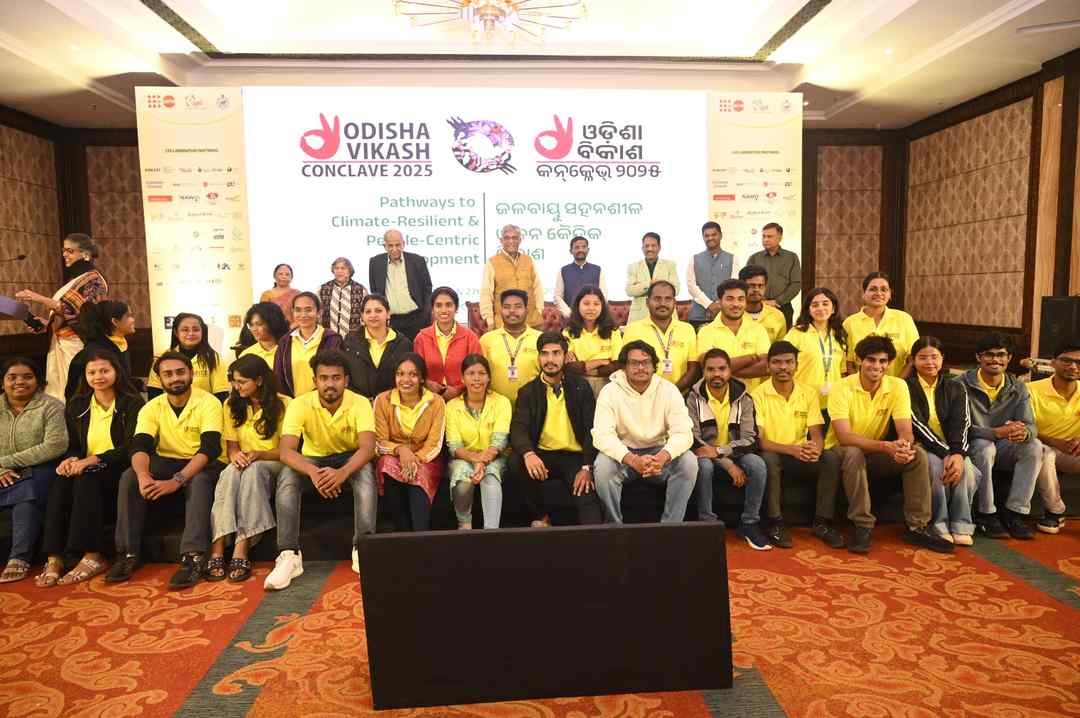
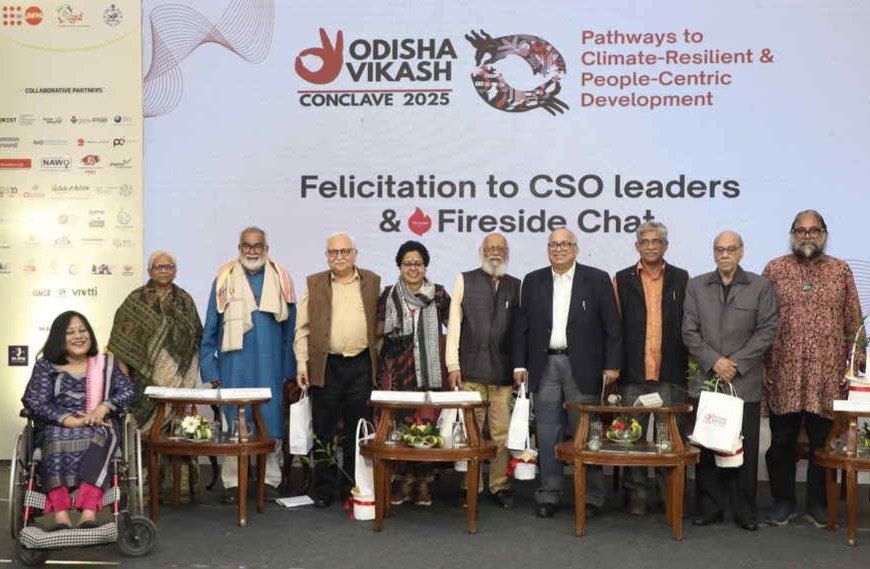
The Odisha Vikash Conclave 2025 served as a landmark platform for shaping an actionable roadmap for climate-resilient development. Across 15 sessions and 4 special discussions, participants explored strategies to influence policy decisions while emphasizing the critical need to strengthen climate resilience. The event culminated in a dynamic dialogue among thematic track leaders, government officials, academic experts, and civil society representatives.
”While science and technology should inform norms and standards through rigorous evidence, development must also reflect people’s aspirations, values, and cultural practices.
Prof. Amitabh KunduProfessor Emeritus, L.J. University
”The outcomes of the OVC 2025 are closely aligned with the Vision 2036/2047, to three core pillars: Wellness, Prosperity, and Equity. Achieving these ambitions at the grassroots level will require strong collaboration, where the contributions of CSOs remain indispensable.
Ms Sudhapriya DasAdditional Director in the Planning & Convergence Department of the Government of Odisha.
Panelist & Speakers











COLLABORATORS
























Reports & Factsheets
Executive Summary The Odisha Vikash Conclave (OVC) 2025, held on…
Executive Summary The Odisha Vikash Conclave (OVC) 2025, held on…