OVC 2020
Odisha Vikash Conclave
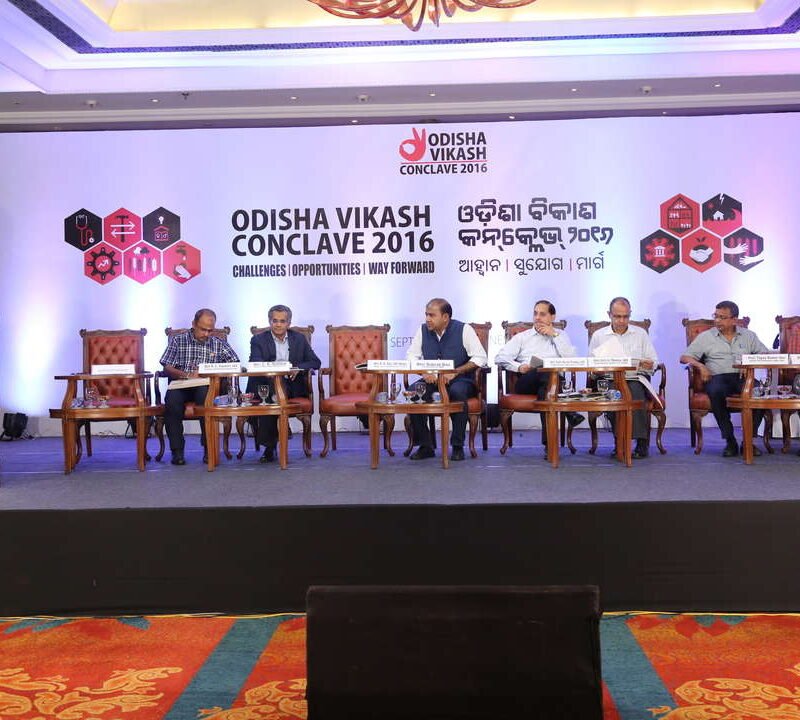
The multiple development challenges in Odisha are a “many hands problem”. The need is to develop a multi stakeholder approach. Odisha Development Initiative (ODI) as a broad coalition was created for multi-stakeholder dialogue involving Civil Society Organisations (CSOs), Academia, Corporate Sector, Media and the Government. The joint efforts by several likeminded development organizations under ODI lent the Odisha Vikash Conclave (OVC) 2016 and 2018 uniqueness of its kind. The OVC consultations delved deep into problems, issues, responses and remedies, and came up with an action agenda. The ODI platform drives towards building synergy among stakeholders articulating a transformative development agenda for the State in harmony with the Sustainable Development Goals (SDGs).
Download PDF Version


Thematic Tracks
Back Drop
The inaugural session began with a welcome address by Shri Basanta Kumar Nayak to all the participants and the panelists virtually joined in the conclave. The first and the second editions of the OVC were organised in 2016 and 2018 respectively and this was the third edition which was organized on 23rd December 2020. This was a unique event for all the stakeholders including civil society, government, people’s organizations, thought leaders and the policy making bodies. The key objectives of this event were to: identify the grassroots level development issues in Odisha and generate shared understanding among the multiple stakeholders; provide the government (both State and Centre) with grassroots perspective and feedback from the ground; and build synergy/ collaboration among multi-stakeholder towards realization of Sustainable Development Agenda 2030. It was also a great event in which the Odisha Development Report 2020 would be released, he added.
Objectives
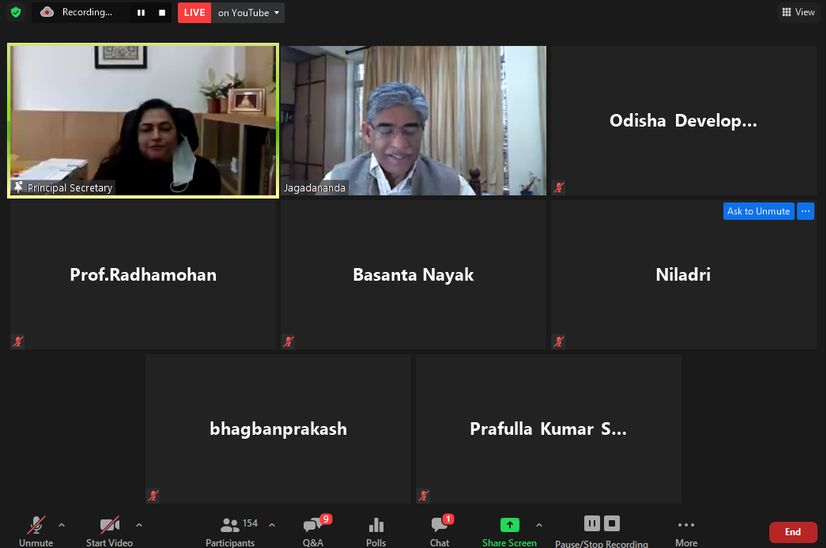
The multiple development challenges in Odisha are a “many hands problem”. The need is to develop a multi stakeholder approach. Odisha Development Initiative (ODI) as a broad coalition was created for multi-stakeholder dialogue involving Civil Society Organisations (CSOs), Academia, Corporate Sector, Media and the Government. The ODI platform drives towards building synergy among stakeholders articulating a transformative development agenda for the State in harmony with the Sustainable Development Goals (SDGs).
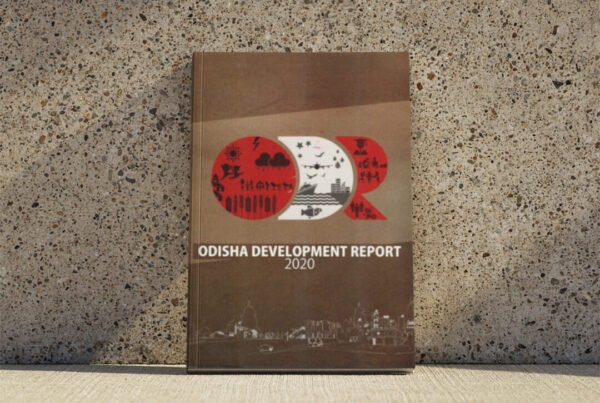
Release of Odisha Development Report 2020
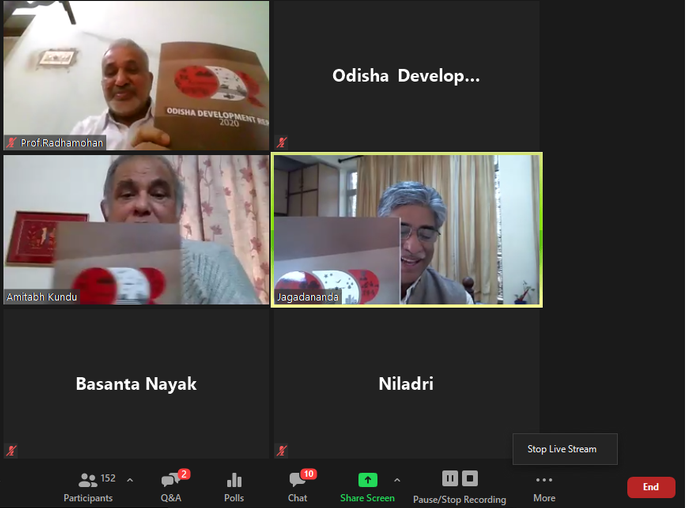
The Odisha Development Report 2020 carrying comprehensive insights on the development scenario of the state with data and grassroots realities was released on the occasion of OVC 2020 by Padmashree Prof. Radhamohan, eminent Environmentalist, in the presence of Prof. (Dr.) Amitabh Kundu, Mrs. Ranjana Chopra, Shri Jagadananda, collaborators of ODI and the delegates present in the Conclave.
Scaling up Natural Farming Model in Odisha
Odisha has been a pioneer state to promote various agroecological initiatives in the past decade. The public and civil service institutions are aligned to the cause of the service of the farmers and the ecology. But, to realise the benefits of all these initiatives at a systemic scale and organise a landscape level approach of transformation, “Odisha Natural farming programme” was proposed by the CSOs participating in the Odisha Vikash Conclave on 23 Dec 2020.
Download Background Note
Highlights
- Natural farming and introduction to the “National Coalition for Natural Farming”
- The potential challenges that are hindering the transition into natural farming.
- Roles of farmers and stakeholders in transforming from chemical-based conventional farming to natural farming practices.
Policy Recommendations
- Developing Champion farmers e. agents of change, and establishing and engaging local level institutions viz. Bio-Resource Centres, Seed Systems for landscape level change. Hypothesis: Creating local systems provide necessary support for transitioning individuals and engage sparse action and stakeholder in a common dialogue.
School Education: Recovery from COVID Pandemic
All the schools in Odisha have been closed since 13th March 2020 as per the decision of the Government due to the outbreak of corona virus. There is no certainty when the schools will reopen. While other critical needs such as health, water and sanitation are being responded to; educational needs cannot be forgotten and these have an equally detrimental impact if left unaddressed. The ‘pile-on effect’ of the corona virus is that, during the global COVID-19 pandemic, interruptions to education can have long term implications, especially for the most vulnerable children – losses in learning; increased dropout rates; and missing the mid-day- meal and so on.
Highlights
- Sharing of the experiences relating to virtual learning during Covid Pandemic
- Impact of school closure/ merger on the children particularly the vulnerable groups
- Preparedness at various levels for reopening of schools
- Preparedness for implementation of National Education Policy 2020 in Odisha
- Strengthening School Education in Odisha: Way Forward
Policy Recommendations
The key recommendations which emerged out of the consultation were summarized as follows.
- Looking at the impact of Covid pandemic, a committee should be formed in each school involving community leaders, teachers and govt. functionaries from the line department to review the existing facilities available/ status of the school in all aspects with focus on the differently-abled and the girls; and come up with a detailed report highlighting what are the measures to be taken before and after reopening of the school
- Massive awareness drive including all the stakeholders directly or indirectly involved in the matter of school education to be undertaken to bring all the children back to school.
Way Forward
The mission of all education systems is to overcome the learning crisis we were already living and respond to the pandemic we are all facing. The challenge today is to reduce as much as possible the negative impact this pandemic will have on learning and schooling and build on this experience to get back on a path of faster improvement in learning. As education systems cope with this crisis, they must also be thinking of how they can recover stronger, with a renewed sense of responsibility of all actors and with a better understanding and sense of urgency of the need to close the gap in opportunities and assuring that all children have the same chances for a quality education. This pandemic has the potential to worsen these outcomes even more if we do not act fast.
Migration: Changing the Broad Contours from Distress Migration to Safe Migration
In India ensuring sustainable livelihood for citizens is a major challenge. The employment challenge for Odisha essentially boils down a mismatch between quality of available labour and minimal standards required for jobs on offer. At the same time, agriculture and allied activities employ 62 % workers and they contribute only 20 % of the GSDP. Census 2011 shows even as Odisha’s workforce grew to 23% during 2001-11, in the same decade, there were 3 % less cultivators and farm labour with women cultivators and farm labour declining by a massive 19 %.
Download Background Note
Highlights
- What would be the strategy to implement “Interstate Migrant Act” in lieu of new labor code?
- How can coordination between Odisha and the destination states for its out-migrants be formalized and improved? Specifically, how can Odia out-migrants’ access to IDs, PDS, education, and health be ensured at destination?
- How to make Odisha’s cities safe for the rural in-migrants?
- How to design a pro-migration policy for the state of Odisha?
Policy Recommendations
- Migration is not a uniform process it has different forms. There are vulnerable groups as well. Therefore, they need protection from the state either through legislation or universal access to social protection. In addition, universal social protection framework may be prioritized.
- Our country lacks a data base of migrant workers. Although Odisha possess some data base, it should be available at the public domain.
- As per 73rd and 74th Constitutional Amendment, planning should be focused at the grass root level and development process must be integrated with this.

Impact of COVID Pandemic on Women and Girls: Build Back Better
World over people are suffering and are affected by coronavirus. It’s been almost a year that people are trapped in their homes and finding it difficult to step out of their homes because of the deadly fear that has been created by the virus. Though there have been restrictions and chaos in all aspects such as political, economical and social; humans are now trying to adapt with the situations and have created a new normal. Though we are distanced physically due to the pandemic, technology brought us together and made us close to each other in these hard times.
Download Background Note
Highlights
- Work from home is not an option for women: As most of the women are engaged in various works like health sector, social work etc. work from home is not an option for them and thus they are vulnerable to the virus and have this constant fear of suffering from illness.
Way Forward
Addressing impact of the pandemic on the lives and livelihoods of women.
| Immediate Measures | Long Run |
|
|
Development Priorities in Odisha: Role of Civil Society
To begin with Ms. Sneha Mishra, Secretary, AAINA shared in brief about the day-long programme along with release of the Odisha Development Report, 2020 and the key outcomes of the deliberations in various thematic sessions; followed by welcome to all the participants and the panellists virtually joined in the conclave. The entire session deliberating on the development priorities in Odisha and the role of Civil Society in this journey was facilitated by Ms. Mishra.
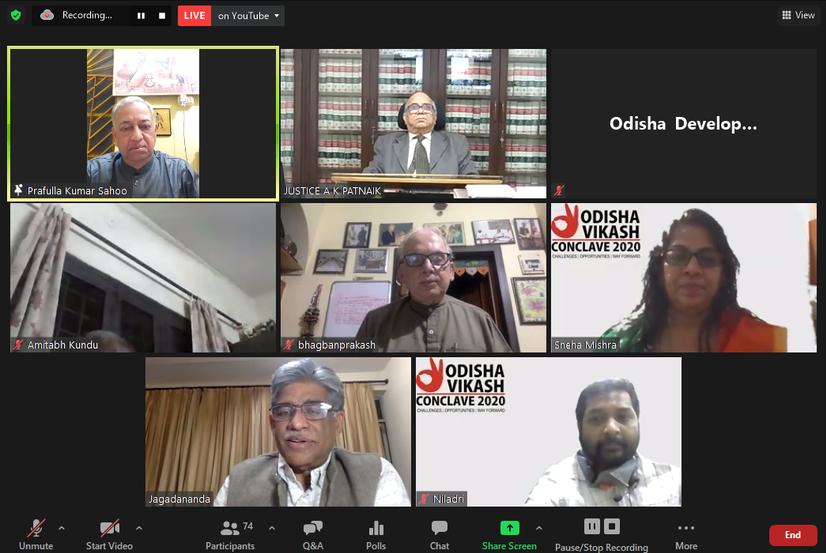
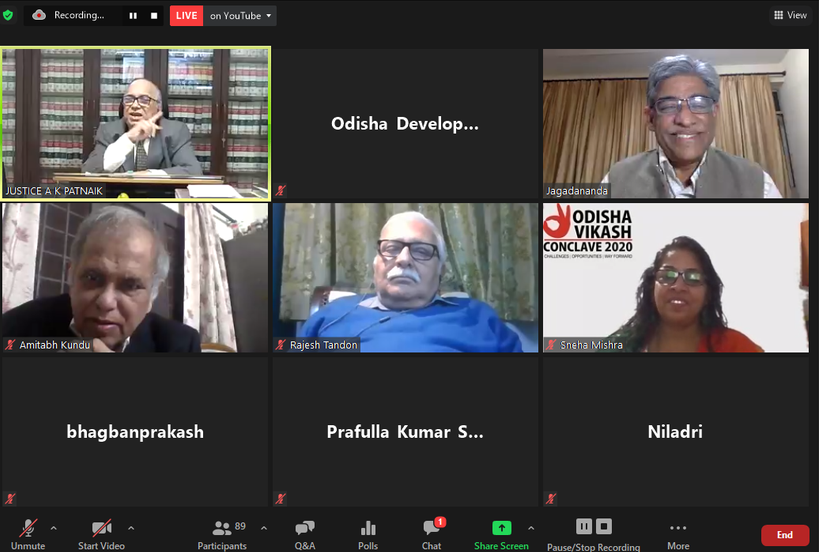
Panelist & Speakers

COLLABORATORS